Social ScienceClass 7

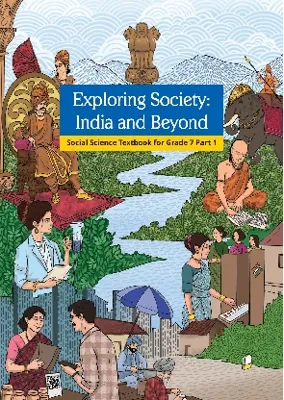
Exploring Society: India and Beyond

Social Science (New)20 Chapters

Chapter notes

What you'll learn in Exploring Society: India and Beyond

A quick revision map of Exploring Society: India and Beyond — the core idea and five key takeaways from each chapter. Tap any chapter to read the full NCERT PDF and detailed notes.

01

Geographical Diversity of India

Chapter 1 of Exploring Society: India and Beyond (Class 7) surveys India's remarkable geographical diversity — from the snow-covered Himalayas and the cold desert of Ladakh to the fertile Gangetic Plains, the Thar Desert, the Peninsular Plateau, and India's island territories.

  • 1India is the seventh-largest country in the world and forms part of the Indian Subcontinent along with Pakistan, Bangladesh, Nepal, Bhutan, Sri Lanka, and Myanmar.
  • 2The Himalayas, about 2,500 km long and stretching across six countries, are called the 'Water Tower of Asia' because melting snow feeds major rivers — the Ganga, Indus, and Brahmaputra.
  • 3The Himalayas were formed about 50 million years ago when the Indian landmass (once part of Gondwana) collided with Eurasia; India still moves northward at about 5 cm per year, so the Himalayas keep growing by about 5 mm annually.
  • 4The three Himalayan ranges are: Himadri (Greater Himalayas, highest and snow-covered year-round with peaks like Everest and Kanchenjunga), Himachal (Lower Himalayas, with popular hill stations like Shimla, Nainital, Darjeeling, and Mussoorie), and the Shivalik Hills (outermost, transitioning to the Gangetic Plains).
  • 5Ladakh is India's cold desert where winter temperatures drop below −30°C; the salty Pangong Tso lake and wildlife like snow leopards, ibex, and Tibetan antelopes are found there.
02

Understanding the Weather

Chapter 2 of Class 7 Exploring Society teaches students what weather is, the five elements that make up weather (temperature, atmospheric pressure, wind, precipitation, and humidity), and the instruments used to measure and predict it.

  • 1Weather is defined as the state of the Earth's atmosphere at a particular time and place; almost all weather phenomena take place in the troposphere, which extends 6 to 18 km from the ground.
  • 2The five elements of weather are temperature, atmospheric pressure, wind, precipitation, and humidity.
  • 3A thermometer measures temperature; useful statistics derived from readings include the daily temperature range (max minus min) and the mean daily temperature ((max + min) ÷ 2).
  • 4Rainfall (precipitation) is measured with a rain gauge — water collected in a funnel flows into a measuring cylinder, and the height of water in mm equals the millimetres of rainfall received.
  • 5Atmospheric pressure is measured in millibars (mb) using a barometer; normal sea-level pressure is about 1013 mb, and a reading below 1000 mb signals a depression that can develop into a storm or cyclone.
03

Climates of India

Chapter 3 of Exploring Society: India and Beyond (Class 7) explains why India has so many different climates — from the snowy Himalayas to the hot Thar Desert — and how factors like latitude, altitude, proximity to the sea, winds, and topography shape these climates. It also covers the monsoons, the effect of climate on culture and economy, natural disasters such as cyclones and floods, and the causes and consequences of climate change.

  • 1Weather is what we experience day to day; climate is the long-term pattern of an area measured over several decades.
  • 2India traditionally recognises six seasons (ṛitus): vasanta, grīṣhma, varṣhā, śharad, hemanta, and śhiśhir — each linked to specific rituals and festivals.
  • 3India has at least seven climate types: alpine (Himalayas), temperate (hill stations), subtropical (northern plains), arid (Thar Desert), tropical wet (western coast), semi-arid (Deccan Plateau), and tropical (eastern and southern peninsular India).
  • 4Five key factors determine a region's climate: latitude, altitude, proximity to the sea, winds, and topography.
  • 5The southwest monsoon advances from India's southern tip in early June and covers the entire subcontinent by mid-July; the Western Ghats act as a barrier, giving the western slopes heavy rain while the Deccan receives less.
04

New Beginnings: Cities and States

Chapter 4 of Exploring Society: India and Beyond (Class 7) covers India's Second Urbanisation — the rise of janapadas and sixteen mahājanapadas in the 1st millennium BCE, along with early democratic traditions, iron technology, the first coins, and the varṇa–jāti system.

  • 1India's First Urbanisation (the Harappan civilisation) declined in the early 2nd millennium BCE; urban life was largely absent for about a thousand years before the Second Urbanisation began.
  • 2The Second Urbanisation started in the 1st millennium BCE in the Ganga plains, Indus basin and neighbouring regions; it is known from both archaeological excavations and ancient Vedic, Buddhist and Jain literature.
  • 3A janapada was a territory where a clan settled, led by a rājā; the word comes from Sanskrit meaning 'where the people (jana) have set foot (pada).'
  • 4By the 8th–7th centuries BCE, janapadas had merged into larger states called mahājanapadas; texts list sixteen of them, stretching from Gandhāra in the northwest to Anga in the east and Aśhmaka near the Godavari River.
  • 5Each janapada had a sabhā or samiti (assembly of elders) that advised the rājā; in the mahājanapadas Vajji and Malla, the assembly had greater power and even selected the ruler by vote — making them early republics.
05

The Rise of Empires

This chapter explains what an empire is and how ancient India's first empires formed — covering the rise of Magadha, the Nanda dynasty, Alexander's brief invasion, and the great Maurya Empire founded by Chandragupta Maurya, shaped by Kautilya's ideas, and remembered through Ashoka's edicts and lasting national symbols.

  • 1An empire is a collection of tributary kingdoms ruled by an emperor from a capital; tributary rulers paid tribute — money, grain, livestock, elephants — as a sign of loyalty but were allowed to continue governing their own areas.
  • 2Ancient Sanskrit words for emperor made the idea clear: 'samraj' meaning 'supreme ruler', 'adhiraja' meaning 'overlord', and 'rajādhiraja' meaning 'king of kings'.
  • 3Magadha rose to power because of its fertile Ganga plains, iron ore from nearby hills (used for iron ploughs and sharper weapons), abundant forests for timber and elephants, and river routes (Ganga and Son) for trade.
  • 4The Nanda dynasty — founded by Mahapadma Nanda around the 5th century BCE — unified many kingdoms; the last Nanda emperor Dhana Nanda became deeply unpopular by oppressing his people, paving the way for the Mauryas.
  • 5Alexander of Macedonia defeated Porus in Punjab (327–325 BCE), but his soldiers, tired and homesick, refused to march further into India; Alexander died in Babylon at age 32 (324–323 BCE) and his empire split among his generals.
06

The Age of Reorganisation

This chapter is about the Age of Reorganisation — the long period after the Maurya empire broke up around 185 BCE — when many new kingdoms rose across India, competed for power, and produced remarkable art, trade networks, and cultural exchanges. It covers dynasties such as the Shungas, Satavahanas, Chedis, Cholas, Cheras, Pandyas, Indo-Greeks, Shakas, and Kushanas.

  • 1The Maurya empire ended around 185 BCE when Pushyamitra Shunga assassinated the last Maurya emperor and founded the Shunga dynasty, which revived Vedic rituals and patronised art — the Bharhut Stupa in present-day Madhya Pradesh, with carved railings depicting the Buddha's life, is one of the finest examples of Shunga art.
  • 2The Satavahanas ruled large parts of the Deccan from the 2nd century BCE, traded as far as the Roman Empire (exporting spices, textiles, sandalwood, ivory, and gold-plated pearls), and left inscriptions in Brahmi script containing numerals that partly resemble modern digits.
  • 3In the south, the Cholas, Cheras, and Pandyas competed for power and produced Sangam literature — the oldest in south India — a collection of poems expressing love, heroism, and generosity; the famous epic Silappadikaram (The Tale of the Anklet) belongs to this tradition.
  • 4The Chola king Karikala built the Kallanai (Grand Anicut), a water diversion system on the Kaveri river that enabled more land to be farmed and earned the area the name 'rice bowl of the South'; restored many times, it is still in use today.
  • 5King Kharavela of the Chedis, a devoted follower of Jain teachings, had the Hathigumpha inscription carved in the Udayagiri caves near Bhubaneswar to record his achievements; he described himself as a 'respector of every sect and repairer of every temple.'
07

The Gupta Era: An Age of Tireless Creativity

This chapter covers the Gupta Empire (3rd–6th century CE) and why historians call it India's 'classical age' — a time of lasting achievements in art, science, literature, and trade. It profiles key Gupta rulers, scholars like Āryabhaṭa and Kālidāsa, and the contemporary kingdoms of the Vākaṭakas, Pallavas, and Kāmarūpa.

  • 1The Gupta Empire flourished from the 3rd to the 6th century CE, with its capital at Pāṭaliputra (present-day Patna); at its peak it covered most of present-day north and west India and parts of central and east India.
  • 2The 6-tonne Iron Pillar of Delhi, erected during Chandragupta II's reign and dedicated to Viṣhṇu, is over 1,600 years old and still has not rusted — scientists believe a unique protective layer formed on its surface due to the special iron used.
  • 3Samudragupta, Chandragupta II's father, is praised in the prayāga praśhasti inscription by court poet Harisena; he aimed to 'unify the Earth' and is also depicted playing the veena on his coins.
  • 4Chandragupta II, also known as Vikramāditya, was a devotee of Viṣhṇu; he kept his court filled with learned men, poets and artists, and his rule is associated with the empire's greatest cultural achievements.
  • 5The period is called the 'classical age' because of major advances in Sanskrit literature (Kālidāsa's works and major Purāṇas), mathematics and astronomy (Āryabhaṭa, Varāhamihira), medicine (Āyurveda codified in the Charaka Saṃhitā and Suśhruta Saṃhitā), and metallurgy.
08

How the Land Becomes Sacred

Chapter 8 — 'How the Land Becomes Sacred' — explains how pilgrimage traditions, religious networks, and the ancient Indian view of nature as divine make the land itself sacred. It covers sacred sites of all major faiths, tīrtha pilgrimages, sacred rivers, mountains, trees, groves, and how pilgrimage routes helped India's cultural integration.

  • 1Sacredness means finding something of deep religious or spiritual significance, worthy of respect and reverence — it can be a special location, a pilgrimage journey, or the land itself.
  • 2All major religions have sacred sites in India: Buddhist sites include the Great Stūpa at Sanchi and the Mahabodhi Stūpa at Bodh Gaya; Sikh takhts include the Akal Takht at Amritsar and Takht Sri Patna Sahib at Patna; Jain tīrthas include Mount Abu, Girnar, and the Śhatruñjaya hill in Saurashtra.
  • 3Indians have undertaken pilgrimages for at least 3,000 years; a tīrtha literally means a crossing place on a river and symbolically represents crossing from ordinary life to a higher, spiritual life.
  • 4Networks of sacred sites — the chār dhām (located at the four corners of India), the 12 jyotirlingas, and the 51 Shakti pīthas — crisscross the Subcontinent and make its entire geography sacred.
  • 5The Kumbh Mela is held at Haridwar, Prayagraj, Nashik, and Ujjain; an estimated 660 million people participated in the 2025 Kumbh Mela, and UNESCO has listed it as an 'intangible heritage of the world'.
09

From the Rulers to the Ruled: Types of Governments

Chapter 9 of Class 7 Exploring Society covers the main types of government — democracy, monarchy, theocracy, dictatorship, and oligarchy — explaining where each gets its power, how it is formed, and why democracy is considered the most popular form of government in the modern world.

  • 1Government has three functions: legislative (making rules), executive (putting rules into practice), and judicial (making sure rules are followed).
  • 2Democracy means 'rule of the people' — the people are the source of power. Abraham Lincoln described it as 'government of the people, by the people, for the people.'
  • 3Fundamental principles of all democracies include equality, freedom, universal adult franchise (the right of every adult to vote), fundamental rights, and an independent judiciary.
  • 4There are two forms of representative democracy: parliamentary (as in India, where the Prime Minister and council of ministers are also members of Parliament) and presidential (as in the USA, where the President is elected by the people and works independently of the legislature).
  • 5A monarchy is ruled by a king or queen. An absolute monarchy (e.g., Saudi Arabia) gives the monarch complete control, while a constitutional monarchy (e.g., the United Kingdom) leaves only nominal power with the king or queen — real power rests with the elected parliament.
10

The Constitution of India: An Introduction

Chapter 10 of Exploring Society: India and Beyond introduces the Constitution of India — what it is, how the Constituent Assembly wrote it between 1946 and 1949, what influenced it, and its key features including Fundamental Rights, Directive Principles of State Policy, and the Preamble. The Constitution came into effect on 26 January 1950, which is why India celebrates Republic Day on that date.

  • 1The Constitution was adopted on 26 November 1949 and came into effect on 26 January 1950 — which is why India celebrates Republic Day every year on that date.
  • 2The Constituent Assembly was formed on 9 December 1946 with 389 members (reduced to 299 after Partition), including 15 women; Dr. Rajendra Prasad was its Chairman.
  • 3Dr. B.R. Ambedkar chaired the Drafting Committee; he was also India's first Law and Justice minister.
  • 4The Indian Constitution is the world's largest written constitution, currently with 25 parts and 12 schedules — the original had 22 parts and 8 schedules when it came into effect.
  • 5Fundamental Rights (such as the Right to Equality and Right to Freedom) are enforceable in court, while Directive Principles of State Policy are guidelines the government is expected to follow but cannot be taken to court over.
11

From Barter to Money

Chapter 11, "From Barter to Money," explains how people first exchanged goods and services through barter, why the limitations of barter led to the invention of money, and how money has evolved from cowrie shells and metal coins to paper currency and digital payments like UPI.

  • 1The barter system is the exchange of goods or services without using money; it was the earliest form of exchange.
  • 2Barter has five key limitations: double coincidence of wants, no common standard measure of value, divisibility, portability, and durability problems.
  • 3Money was created to solve barter's problems; it serves as a medium of exchange, a store of value, and a standard of deferred payment.
  • 4Ancient Indian coins were called kārṣhāpaṇas or paṇas, made from gold, silver, copper, or their alloys, with symbols called rūpas punched on them.
  • 5Paper money was first used in China and was introduced in India in the late 18th century; the Reserve Bank of India (RBI) is the only legal authority to issue currency in India today.
12

Understanding Markets

Chapter 12 of Exploring Society: India and Beyond explains what markets are, how prices are set through buyer-seller negotiation, and the different types of markets — physical, online, wholesale, retail, domestic, and international — along with the government's role in keeping markets fair and safe.

  • 1A market is a place where buyers and sellers exchange goods and services at a mutually agreed price; it can be a physical location (bazaar, haat) or an online platform.
  • 2Price is determined by the interaction of demand from buyers and supply from sellers — if the price is too high buyers walk away; if too low the seller makes a loss.
  • 3Markets take many forms: physical or online, domestic or international, wholesale or retail — each serving a different role in moving goods from producers to final consumers.
  • 4Wholesalers buy goods in bulk from producers, store them in godowns or cold storage, and supply retailers; retailers sell in smaller quantities directly to consumers.
  • 5The Hampi Bazaar in Karnataka was a thriving market in the Vijayanagara Empire; Portuguese traveller Domingos Paes called it 'the best-provided city in the world'.
13

The Story of Indian Farming

This chapter tells the story of Indian farming from prehistoric times to today, showing how climate, soil, water, and seeds shape what crops grow where — and how traditional wisdom and modern methods can work together.

  • 1Agriculture and allied activities contribute about 18% of India's GDP and employ about 46% of the workforce (2022–23); more than 75% of people working in agriculture in rural India are women (2025).
  • 2India has three cropping seasons — kharif (monsoon crops, sown with the southwest monsoon June–September), rabi (winter crops), and zaid (summer crops); these Arabic-origin terms have been in use since Mughal times.
  • 3India's six major soil types — alluvial, black, red, laterite, desert, and mountain/alpine — each support different crops; alluvial soil, carried by rivers, is the most nutrient-rich.
  • 4Traditional soil conservation includes crop rotation, multiple cropping, contour ploughing, and organic fertilisers like cow dung; modern techniques include terracing and afforestation.
  • 5The Green Revolution (1960s–70s), led by M.S. Swaminathan, introduced high-yielding seeds, chemical fertilisers, and mechanised equipment, making India self-sufficient in food — but it also caused long-term soil degradation, groundwater depletion, and health risks.
14

India and Her Neighbours

This chapter explores India's relationships with her neighbours — both land-based (China, Pakistan, Bangladesh, Nepal, Bhutan, Myanmar, Afghanistan) and maritime (Sri Lanka, Maldives, Thailand, Malaysia, Singapore, Indonesia, Iran, and Oman) — tracing centuries of shared history, trade, culture, and cooperation. It shows how geography, religion, and ancient trade routes have kept India deeply connected to the wider world.

  • 1India has both land-based neighbours (China, Pakistan, Bangladesh, Nepal, Bhutan, Myanmar, Afghanistan) and maritime neighbours (Sri Lanka, Maldives, Thailand, Malaysia, Singapore, Indonesia, Iran, Oman) — her land boundary stretches over 15,100 km and coastline is approximately 11,100 km.
  • 2Buddhism, which originated in India, spread to China (around the 1st century CE), Sri Lanka (3rd century BCE, brought by Mahendra and Sanghamitra, children of Emperor Ashoka), Bhutan (Vajrayana school introduced by Guru Padmasambhava in the 8th century CE), and many other neighbours.
  • 3India and Nepal share an 'open border' under the 1950 Treaty of Peace and Friendship — citizens of both countries can cross without a passport or visa; India is also Nepal's largest trading partner.
  • 4SAARC (South Asian Association for Regional Cooperation) was formed in 1985 and includes Afghanistan, Bangladesh, Bhutan, India, the Maldives, Nepal, Pakistan, and Sri Lanka, aiming to promote shared development.
  • 5India has helped smaller neighbours in times of crisis: quick aid to the Maldives during the 2004 tsunami and the 2014 water crisis in Malé, and building the Zaranj-Delaram highway and the Afghan Parliament building in Afghanistan.
15

Empires and Kingdoms: 6th to 10th Centuries

This chapter covers India's history from roughly 600 CE to 1000 CE — the centuries after the Gupta Empire ended — when powerful regional kingdoms like the Pālas, Rāṣhṭrakūṭas, Chālukyas, Pallavas, and Cholas rose across the subcontinent. Students learn how Harṣhavardhana united northern India, how the Bhakti tradition began in south India, how Brahmagupta revolutionised mathematics, and how Indian rulers successfully resisted Arab invasions.

  • 1Harṣhavardhana ascended the throne at Kannauj in 606 CE and built an empire over much of northern and eastern India; he patronised scholars like Bāṇabhaṭṭa, who wrote the novel Kādambarī — regarded as one of the world's first novels.
  • 2After Harsha's death in 647 CE, the Pālas, Gurjara-Pratīhāras, and Rāṣhṭrakūṭas fought the Tripartite Struggle over Kannauj through the 8th and 9th centuries with fluctuating outcomes and no lasting winner.
  • 3The Pāla dynasty, founded by Gopāla in 750 CE, patronised great centres of learning: Vikramaśhilā (Bihar) — with six colleges and nearly 3,000 scholars — and Somapura (Bangladesh); each college had a dvārapaṇḍita or 'scholar gatekeeper' who tested students before entry.
  • 4The Rāṣhṭrakūṭa king Krishna I built the Kailaśhanātha temple at Ellora in present-day Maharashtra — described as the largest rock-cut temple in India, carved entirely out of a hillside.
  • 5The Bhakti tradition spread from south India from the 6th century onward, led by the 12 Ālvārs (devotees of Viṣhṇu) and the 63 Nāyanārs (devotees of Śhiva); both groups included women saints, and their devotional poetry in Tamil was open to everyone across social divisions.
16

Turning Tides: 11th and 12th Centuries

Turning Tides: 11th and 12th Centuries covers the major changes in India during these two centuries — including deep invasions by Turkic powers like Mahmud of Ghazni and Muhammad Ghuri, the rise of powerful kingdoms such as the Cholas, Kakatiyas, and Hoysalas, and remarkable achievements in art, architecture, mathematics, and philosophy.

  • 1Mahmud of Ghazni defeated the Hindu Shahis and conducted 17 raids into India — destroying the temples at Mathura (1018) and Somnath (1026) and looting vast treasure — but returned to Ghazni each time without seeking permanent rule beyond Punjab.
  • 2Persian scholar al-Biruni accompanied Mahmud around 1017, learned Sanskrit, conversed with Indian scholars, and wrote an encyclopaedic survey of Indian religion, philosophy, literature, geography, and sciences, also compiling works of Aryabhata, Varahamihira, and Brahmagupta.
  • 3Mathematician Bhaskaracharya (Bhaskara II), born in 1114, wrote Lilavati (basic mathematics through riddles), Bijaganita (algebra), and Siddhantashiromani (advanced astronomical calculations) — works later translated into Persian and influential for centuries.
  • 4Chola kings Rajaraja I (985–1014) and Rajendra I (1014–44) built the Brihadishvara temple at Thanjavur, conquered parts of Sri Lanka, and launched a successful naval expedition against the Shrivijaya Empire to protect Indian trade with China.
  • 5Muhammad Ghuri, unlike Mahmud, sought permanent conquest: after defeating Prithviraj III (Prithviraj Chauhan) at the Second Battle of Tarain in 1192, he captured Delhi and left general Qutb-ud-din Aibak to consolidate Ghurid rule — the beginning of what would become the Delhi Sultanate.
17

India, a Home to Many

"India, a Home to Many" explores how communities including Jews, Parsis, Syriac Christians, Arab merchants, Armenians, Baha'is, and Tibetan refugees came to India seeking safety or opportunity and settled here across many centuries. The chapter shows how Indian values like vasudhaiva kutumbakam — "the whole world is family" — made India a welcoming home for persecuted people from across the world.

  • 1The Bene Israel Jews came to India around 175 BCE when their ship was wrecked on the Konkan coast near Mumbai; they grew to a community of over 25,000 shortly after India's independence.
  • 2The Raja of Kochi granted Jewish settlers land free of cost and they built a synagogue, which allowed them to practise their faith freely as part of Indian society.
  • 3Parsis (followers of Zoroastrianism) fled Persia after the Islamic conquest in the 7th century CE and arrived on India's western coast (present-day Gujarat) between the 8th and 10th centuries; India today has the world's largest Zoroastrian population.
  • 4Syriac Christians were persecuted in both the Roman and Persian Empires from the 4th century CE and travelled to the Malabar coast of India (present-day Kerala) to live and worship freely.
  • 5Arab merchants arrived from the 7th century onward, settled peacefully along India's west coast, married local women, and helped build the Cheraman Juma Masjid, described in the chapter as India's oldest mosque.
18

The State, the Government, and You

This chapter explains the difference between a state and a government, and between a democracy and a republic — showing why India is a democratic republic. It also covers how the three organs of government (legislature, executive, judiciary) and three tiers of government (central, state, local) work, and how citizens can make the government accountable.

  • 1A state has four essential parts: people (permanent population), territory (defined land with clear boundaries), a government, and sovereignty — the full power to make and implement laws without interference from any outside state or body.
  • 2The government is only one part of the state — it can change after elections, but the state itself remains, much like a school continues even as teachers come and go.
  • 3In a democracy, people choose their government through free and fair elections. In a republic, the head of state is elected (not a hereditary king or queen), and the ruler's powers are limited by a constitution. India is both — a democratic republic.
  • 4Not all democracies are republics: the UK, Canada, and Sweden are democracies but have monarchs as heads of state. India and the USA are both democracies and republics.
  • 5The three pillars of government are the legislature (makes laws), the executive (implements laws and policies), and the judiciary (ensures laws are followed, interprets them, and protects citizens' rights through judicial review).
19

Infrastructure: Engine of India's Development

This chapter explains what physical infrastructure is — roads, railways, airports, ports, and communication networks — and how it drives India's economic development and improves daily life for people and communities.

  • 1Physical infrastructure includes transportation (roads, railways, bridges, airways), utilities (electricity, water pipelines), communication networks (internet, telephone lines, satellites), and energy systems (windmills, solar parks, oil and gas pipelines).
  • 2India has the second-largest road network in the world as of 2024, with about 150,000 km of national highways as of 2025. NH44, running 4,112 km from Srinagar to Kanyakumari, is the longest national highway. The Golden Quadrilateral connects Delhi, Mumbai, Chennai, and Kolkata.
  • 3Indian Railways is the fourth-largest railway system in the world, carries over 20 million passengers every day, and is one of the cheapest train services in the world. Cargo trains use 75–90 per cent less energy than road transport.
  • 4Metro trains run in 23 Indian cities covering a total length of over 1,000 km. India will soon have the third-largest metro network in the world after China and the USA.
  • 5India had 159 airports in 2025 and handled around 376 million passengers in 2024–25, making it the country with the third-highest domestic air traffic in the world after the USA and China.
20

Banks and the Magic of Finance

This chapter explains financial infrastructure — banks, payment systems, and the stock market — and shows how they help people save money, take loans, and transfer money to support economic activity and a nation's progress.

  • 1Financial infrastructure is a network of banks, payment systems, stock markets, and other financial institutions that help people, businesses, and the government manage money and financial transactions.
  • 2Banks offer three types of accounts: a savings account (earns interest, has withdrawal limits), a current account (for businesses, no interest but no withdrawal limits), and a fixed deposit account (higher interest earned after a fixed period like 3 or 5 years).
  • 3Compounding means earning interest on previously earned interest — ₹1000 deposited at 6% interest per year grows to ₹1060 after year one, ₹1123.60 after year two, and ₹2012.20 after 12 years.
  • 4The Reserve Bank of India (RBI), established in 1935 and functioning as India's central bank since 1949, supervises all banks, prints and distributes currency, and fixes the benchmark interest rates for lending to commercial banks.
  • 5The Pradhan Mantri Jan Dhan Yojana, launched in 2014, opened over 50 crore bank accounts — mainly for women — with no minimum balance or fees required, extending banking services to low-income earners across India.

More Social Science books

Want offline access with notes & solutions?

Download CBSE Prepmaster for free — includes NCERT solutions, flashcards, mock tests & more.

Download Free App