Social ScienceClass 10

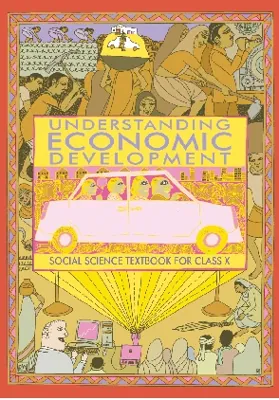
Understanding Economic Development

Economics5 Chapters

Chapter notes

What you'll learn in Understanding Economic Development

A quick revision map of Understanding Economic Development — the core idea and five key takeaways from each chapter. Tap any chapter to read the full NCERT PDF and detailed notes.

01

Development

Chapter 1 of NCERT Class 10 Economics, "Development", explores what development means through different perspectives, how countries compare using income and other indicators, and why sustainable development matters for the future.

  • 1Development means different things to different people based on their life situations
  • 2Per capita income is the average income calculated as total income divided by population
  • 3Income distribution matters—countries with equal distribution are more developed
  • 4Non-income indicators include literacy rate, infant mortality rate, life expectancy, and net attendance ratio
  • 5Human Development Index (HDI) measures education, health status, and per capita income together
02

Sectors of the Indian Economy

Chapter 2 of NCERT Class 10 Economics, "Sectors of the Indian Economy," classifies economic activities into three sectors (primary, secondary, tertiary) and examines how India's economy has shifted over forty years toward service-based production while employment remains concentrated in agriculture.

  • 1Primary sector: agriculture, dairy, mining—natural resource extraction
  • 2Secondary sector: manufacturing and industrial production
  • 3Tertiary sector: services like transport, banking, trade, education, healthcare
  • 4Gross Domestic Product (GDP): total value of final goods and services produced in a country yearly
  • 5Organised vs. Unorganised: formal employment with job security and benefits versus irregular, low-wage work
03

Money and Credit

Chapter 3 of NCERT Class 10 Economics, "Money and Credit", explores money as a medium of exchange, modern forms of currency, the role of banks and demand deposits, terms of credit including interest and collateral, and the critical distinction between formal and informal lending sources.

  • 1Double coincidence of wants—the core problem solved by money in exchange systems
  • 2Modern forms of money include currency and demand deposits with banks
  • 3Banks mediate between depositors (surplus funds) and borrowers (credit needs)
  • 4Terms of credit consist of interest rate, collateral, documentation, and repayment mode
  • 5Formal sector credit (banks, cooperatives) is cheaper than informal sources (moneylenders)
04

Globalisation and the Indian Economy

Chapter 4 of NCERT Class 10 Economics, 'Globalisation and the Indian Economy', explores how multinational corporations (MNCs) spread production across countries and how trade and foreign investment integrate markets globally. The chapter examines the factors enabling globalisation—technology, liberalisation, and the WTO—and analyzes its uneven impact on consumers, producers, and workers in India.

  • 1MNCs (Multinational Corporations) own or control production in more than one nation and set up factories where labour and resources are cheap
  • 2Globalisation is the process of rapid integration between countries through foreign trade and investment
  • 3Technology improvements in transportation and IT (containers, internet, e-mail, telecommunications) have enabled globalisation
  • 4Liberalisation means removing government barriers to foreign trade and investment, allowing businesses to trade freely
  • 5WTO (World Trade Organisation) establishes rules to liberalise international trade, though developed countries retain unfair protections
05

Consumer Rights

Chapter 5 of NCERT Class 10 Economics, 'Consumer Rights', explores how consumers are exploited in the marketplace and their legal protections. The chapter covers consumer movement in India, the Consumer Protection Act 1986 (COPRA), consumer rights, the three-tier Consumer Disputes Redressal Commission system, and standardisation logos like ISI, Agmark, and Hallmark.

  • 1Consumer exploitation: unfair trade practices, short weight, adulteration, false claims
  • 2Consumer movement: organised in 1960s due to food shortages, hoarding, black marketing
  • 3COPRA 1986: Consumer Protection Act, amended 2019 to include online purchases and service deficiency
  • 4Consumer Disputes Redressal Commission: three-tier system (District ≤Rs 1 crore, State Rs 1-10 crore, National >Rs 10 crore)
  • 5Consumer rights: safety, information, choice, redressal, representation, consumer education

More Social Science books

Want offline access with notes & solutions?

Download CBSE Prepmaster for free — includes NCERT solutions, flashcards, mock tests & more.

Download Free App